Guide
Under-counter wine fridge dimensions and sizes
Published
Note: This page contains affiliate links. If you buy through them we may earn a commission at no extra cost to you. Learn more
In short
Under-counter wine fridges usually come in widths of about 15, 30, 40 and 60 cm to match kitchen unit sizes. Heights are typically around 82 to 88 cm, adjusted with the feet to fit under the worktop, and depths around 57 cm before the door and handle. Always measure your gap and check the maker's installation drawing, which gives the exact niche size.
Products for this job
Compare all 5 productsSeverin KS 9894: 33 bottles in a 48 cm wide body
Check price on AmazonAffiliate linkLiebherr UWKes 1752-22: under-worktop with door alarm
Check price on AmazonAffiliate linkPioneerWorks 24-bottle cooler for built-in or freestanding
Check price on AmazonAffiliate link
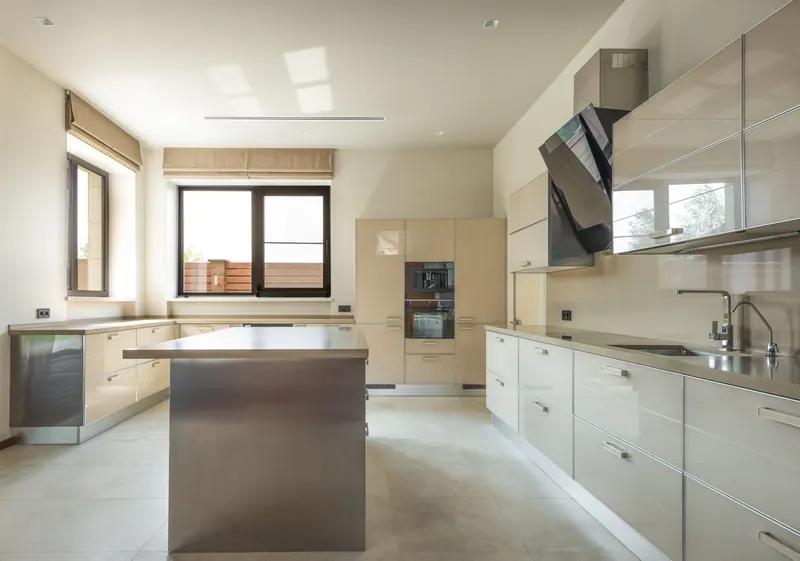
Kitchen units in the UK are built on a fairly standard grid, and under-counter wine coolers are designed to slot into it. That makes planning simpler, but small differences matter: a few millimetres of height, the thickness of a handle or the swing of a door can decide whether a cooler fits and opens properly. This guide explains the common widths, the height range set by adjustable feet, depth with and without the door and handle, and how to measure your gap. Every model has its own installation drawing, so use these figures for planning and the maker's figures for the final check.
Standard widths and typical capacities
The widths below match common kitchen cabinet sizes. Capacities are typical figures quoted in 75 cl Bordeaux bottles and vary by model and shelf design.
| Nominal width | Typical appliance width | Typical capacity | Zones |
|---|---|---|---|
| 15 cm | About 148 to 150 mm | Around 6 to 8 bottles | Usually single |
| 30 cm | About 295 to 298 mm | Around 18 to 20 bottles | Single or dual |
| 40 cm | About 395 to 398 mm | Around 25 to 30 bottles | Single or dual |
| 60 cm | About 595 to 598 mm | Around 40 to 50 bottles | Single or dual |
Height and adjustable feet
Most UK worktops sit about 90 cm from the floor, and the space under them is usually around 82 to 88 cm once the worktop thickness is taken off. Under-counter wine coolers are typically built at around 82 cm with feet that raise them to the top of that range. Check the minimum and maximum heights the maker gives, and measure the underside of your worktop at the front and back, because floors and worktops are not always level.
Leave the clearance at the top the installation drawing asks for. Some built-in units are designed to sit with only a few millimetres to spare, while others need more room for air to move.
Depth, door and handle
Kitchen base units are usually about 56 to 60 cm deep. Under-counter wine coolers are often around 57 cm deep for the cabinet, but the door, handle and any plinth adjustments add to that. Many makers design the door to sit roughly flush with neighbouring doors; others stand slightly proud.
Two depth figures are worth checking: the depth to the front of the door, and the depth with the door open at 90 degrees. The second matters if the cooler is near a wall, an island or a tall unit, as a door that cannot open past 90 degrees may stop shelves sliding out.
How to measure your gap
- 1
Measure the width at the top, middle and bottom of the gap. Use the smallest figure.
- 2
Measure the height from floor to the underside of the worktop at the front and back. Use the smallest figure.
- 3
Measure the depth from the back wall to the front of the neighbouring doors, and note any pipes, sockets or skirting behind.
- 4
Check where the plinth is and whether it can be cut or removed for a front-venting grille.
- 5
Check which side the door should hinge and whether there is room for it to open fully.
- 6
Compare your figures with the niche dimensions in the maker's installation drawing, not just the appliance size.
Note:Plan the socket position before you buy. It should usually be in an adjacent cupboard where it can be reached and switched off, not behind the cooler. If a new socket or spur is needed, use a qualified electrician.
Built-in versus freestanding sizes
A freestanding cooler can look like it fits an under-counter gap on paper, but most vent at the back and need space around them that a cabinet gap does not give. A built-in or under-counter model is designed to vent through the front at the plinth. The gaps needed differ, so a freestanding cooler of the same size can overheat once built in. Our built-in vs freestanding comparison and ventilation guide explain this.
If you are choosing between widths, our 30 cm vs 60 cm comparison covers the trade-offs, and our under-counter guide and slim wine fridge guide list stated widths.
Frequently asked questions
What are standard wine fridge dimensions in mm? Common under-counter widths are about 150, 300, 400 and 600 mm, heights around 820 to 880 mm and depths around 570 mm, but check each model.
Will a 60 cm wine fridge fit a 60 cm gap? Usually, because 60 cm appliances are made slightly narrower, around 595 to 598 mm. Check the niche size in the manual.
Can I fit a wine fridge under a lower worktop? Some compact models are around 75 cm high, but they are often freestanding. Check the venting.
How many bottles fit in a 30 cm wine fridge? Typically around 18 to 20 standard bottles. See how many bottles a wine fridge holds.
What you need
- Check price on AmazonAffiliate link
Severin KS 9894: 39 dB, 33 bottles
- Check price on AmazonAffiliate link
YuAiStore 12-bottle dual zone, compressor, 5 to 18 °C